


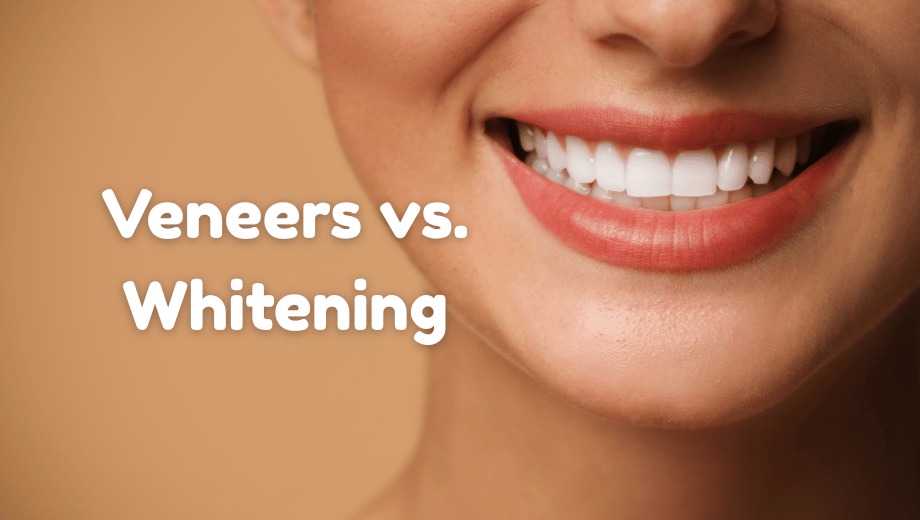
A bright and attractive smile is one of the most desired features in cosmetic dentistry. Many patients who wish to improve their smile often ask whether teeth whitening or dental veneers is the better option. While both treatments enhance the appearance of teeth, they serve different purposes and are recommended for different dental concerns.
Understanding the differences between veneers and teeth whitening can help you choose the most suitable treatment for achieving the smile you want.
What Is Teeth Whitening?
Teeth whitening is a non-invasive cosmetic treatment designed to remove stains and discoloration from the surface of the teeth. Professional whitening treatments use safe bleaching agents to lighten the natural color of the teeth and restore a brighter smile.
Whitening is often recommended for patients whose teeth are healthy but stained due to factors such as coffee, tea, red wine, smoking, or aging. The procedure is quick, effective, and usually completed in a single dental visit or through professional take-home whitening kits.
Results from professional whitening treatments can last from six months to two years, depending on oral hygiene habits and lifestyle choices.
What Are Dental Veneers?
Dental veneers are thin porcelain shells custom-designed to cover the front surface of the teeth. Unlike whitening, veneers do not simply change the color of teeth—they can also improve their shape, size, and alignment.
Veneers are commonly recommended for patients who have:
Deep or stubborn discoloration that whitening cannot correct
Chipped or worn teeth
Gaps between teeth
Uneven or irregularly shaped teeth
Because veneers completely cover the visible surface of the tooth, they provide a complete smile transformation. With proper care, porcelain veneers can last 10 to 15 years or even longer.
Key Differences Between Veneers and Whitening
The main difference between these treatments lies in the type of cosmetic improvement they provide.
Teeth whitening focuses only on improving tooth color, making it ideal for patients whose teeth are naturally well-shaped but stained.
Veneers, on the other hand, address multiple aesthetic concerns at once, including discoloration, shape irregularities, and minor alignment issues.
Whitening is generally the simpler and more affordable option, while veneers are a more comprehensive cosmetic solution for achieving a perfect smile.
Which Treatment Is Right for You?
The best treatment depends on your specific dental condition and cosmetic goals. If your teeth are healthy and you are mainly concerned about discoloration, professional teeth whitening may be all you need to brighten your smile.
However, if you have structural imperfections such as chips, gaps, uneven teeth, or severe staining, dental veneers may be the better option for achieving a long-lasting and balanced smile.
A consultation with a cosmetic dentist can help determine the most appropriate treatment based on your oral health, smile design, and aesthetic expectations.
Conclusion
Both teeth whitening and dental veneers are effective ways to enhance your smile, but they serve different purposes. Whitening offers a quick and conservative solution for stained teeth, while veneers provide a complete cosmetic transformation for more complex dental concerns.