


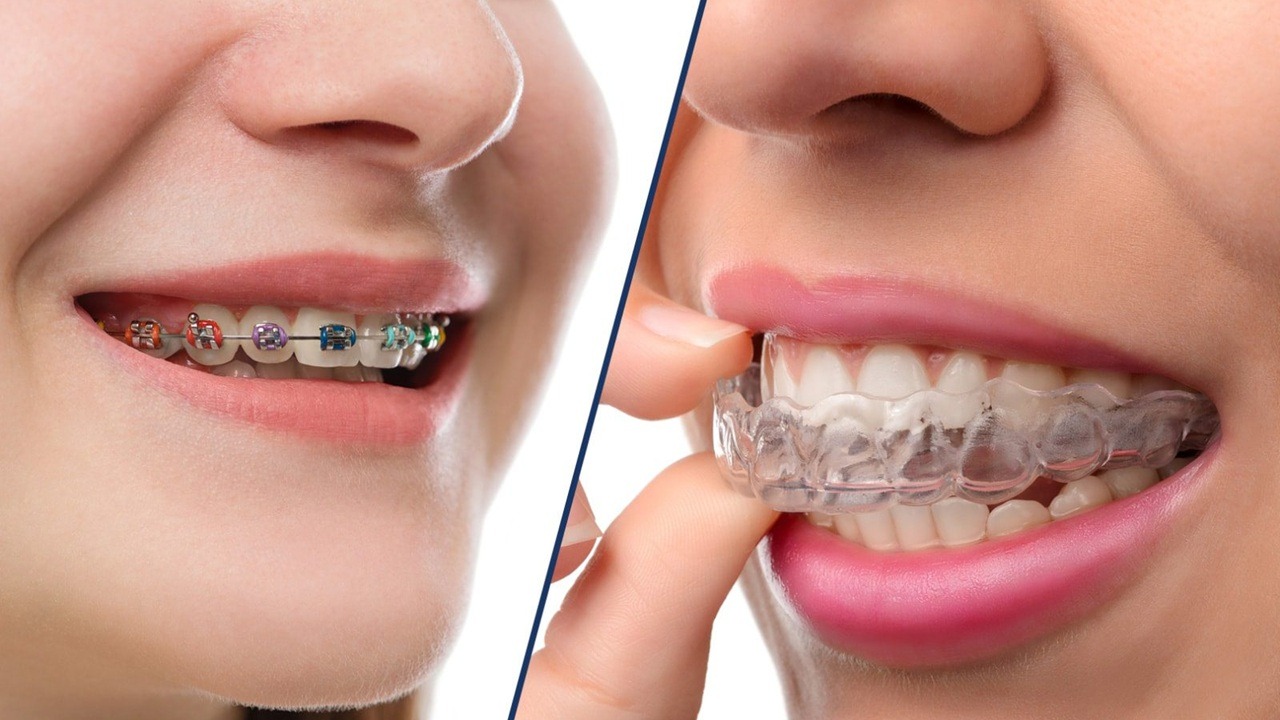
Straightening your teeth can improve both the appearance and function of your smile. Today, patients have more orthodontic options than ever before, with traditional braces and clear aligners being two of the most popular choices.
But which one is better?
The answer depends on your teeth, bite, orthodontic needs, lifestyle, and treatment goals. There is no single solution that is ideal for every patient.
What Are Traditional Braces?
Traditional braces use brackets attached to the teeth and orthodontic wires to gradually move the teeth into their planned positions.
The orthodontist periodically adjusts the braces to guide tooth movement throughout the treatment.
Modern braces can be smaller and more comfortable than older designs, and they remain a highly effective option for treating a wide range of orthodontic problems.
What Are Clear Aligners?
Clear aligners are a series of custom-made, removable trays designed to gradually move the teeth.
Each aligner is worn for a specific period before being replaced by the next one in the treatment sequence.
Because they are transparent and removable, clear aligners are particularly popular with adults and patients who prefer a more discreet orthodontic treatment.
Braces vs. Clear Aligners: What’s the Difference?
Appearance
One of the biggest advantages of clear aligners is their discreet appearance.
Traditional braces are visible because of their brackets and wires, while clear aligners are made from transparent material and are generally much less noticeable when worn.
For patients who are concerned about the appearance of orthodontic treatment, clear aligners can be an attractive option.
Removability
Clear aligners can be removed when eating, drinking, brushing, and flossing.
Traditional braces remain attached to the teeth throughout treatment, which means patients need to be more careful when cleaning around brackets and wires.
Oral Hygiene
Clear aligners can make daily oral hygiene more straightforward because they can be removed before brushing and flossing.
With braces, brushing around brackets and wires requires additional care to remove plaque and food particles effectively.
Regardless of the orthodontic option, maintaining excellent oral hygiene is essential throughout treatment.
Food Restrictions
Patients wearing traditional braces may need to avoid certain hard, sticky, or chewy foods that could damage brackets or wires.
Clear aligners are removed during meals, so patients can generally continue eating their usual foods while following their dentist or orthodontist’s instructions.
Treatment Compliance
Clear aligners require patient responsibility.
They are typically worn for most of the day and should only be removed when eating, drinking certain beverages, brushing, or flossing, according to the treatment plan.
If aligners are not worn as instructed, treatment may take longer or progress differently than planned.
Braces, on the other hand, remain attached to the teeth, so they do not depend on the patient remembering to put them back in.
Treatment Effectiveness
Both braces and clear aligners can successfully correct many orthodontic problems.
However, the most appropriate treatment depends on the complexity of the case. Some movements may be more predictable or easier to achieve with fixed braces, while many mild to moderate alignment problems can be effectively treated with clear aligners.
A professional orthodontic assessment is necessary to determine which option is suitable for your specific situation.
Which Is Faster: Braces or Clear Aligners?
There is no universal treatment time for either option.
Treatment duration depends on factors such as the amount of tooth movement required, the complexity of the bite, patient compliance, and the treatment plan.
Some cases can be completed relatively quickly, while more complex cases require a longer treatment period.
Your orthodontist can provide an estimated timeline after evaluating your teeth and bite.
Are Clear Aligners More Comfortable Than Braces?
Both treatments can cause temporary pressure or discomfort as the teeth move.
Clear aligners do not use traditional brackets and wires, which some patients find more comfortable and convenient. However, aligners can still cause pressure or mild soreness, particularly when a new set is introduced.
Braces may occasionally cause irritation from brackets or wires, especially during the early stages of treatment or after adjustments.
Can Clear Aligners Fix All Orthodontic Problems?
Clear aligners can treat many common orthodontic concerns, including certain cases of:
- Crowded teeth
- Spacing between teeth
- Mild to moderate bite problems
- Rotated teeth
- Certain alignment issues
However, not every orthodontic problem is suitable for clear aligners alone.
Complex cases may require traditional braces or additional orthodontic techniques. A detailed examination is the best way to determine the appropriate treatment.
Which Option Is Better for Adults?
Both options can be suitable for adults.
Clear aligners are particularly popular among adults because they are discreet and removable. They can also make it easier to maintain normal eating and oral hygiene routines.
However, if a case requires more complex tooth movement, traditional braces may still be an excellent choice.
The patient’s orthodontic needs should always come before the treatment’s appearance.
What Happens After Braces or Aligners?
Once your teeth have reached their planned positions, retention is an important part of maintaining the result.
Teeth can naturally shift over time, even after successful orthodontic treatment.
Your orthodontist may recommend a removable or fixed retainer to help maintain the new position of your teeth.
Following your retention plan is essential for protecting your orthodontic results in the long term.
How Do You Choose Between Braces and Clear Aligners?
The right option depends on more than simply choosing between metal brackets and transparent trays.
Your orthodontic professional will consider:
The position of your teeth
Your bite and jaw relationship
The complexity of the case
Your oral health
Your lifestyle
Your ability to follow treatment instructions
Your aesthetic preferences
Your long-term treatment goals
At Dr. Joe Karam’s clinic, each patient’s smile and orthodontic needs are evaluated individually to determine the most appropriate treatment approach.
Frequently Asked Questions
- Are clear aligners better than braces?
Not necessarily. Clear aligners offer advantages such as discreet appearance and removability, while traditional braces can be highly effective for a wide range of orthodontic problems. The better option depends on your individual case.
- Can I eat normally with clear aligners?
Clear aligners are generally removed while eating, allowing you to enjoy a wide range of foods. They should then be cleaned and placed back in according to your treatment instructions.
- How long do I need to wear clear aligners each day?
For treatment to progress as planned, clear aligners generally need to be worn for most of the day. Your orthodontic provider will give you specific instructions based on your treatment plan.
- Do I need a retainer after braces or clear aligners?
In most cases, retention is an important part of maintaining orthodontic results. Teeth can naturally move over time, so your orthodontist may recommend a retainer after active treatment.
Final Thoughts
Both traditional braces and clear aligners can be effective ways to improve the alignment and function of your smile.
Clear aligners may be ideal for patients who prioritize discretion, convenience, and removability, while braces remain an excellent option for many orthodontic cases, including more complex tooth movements.
The most important step is choosing the treatment based on your individual orthodontic needs—not simply which option looks better.
A professional consultation with an experienced dental team can help you understand your options and determine the most appropriate path toward a healthier, straighter smile.