


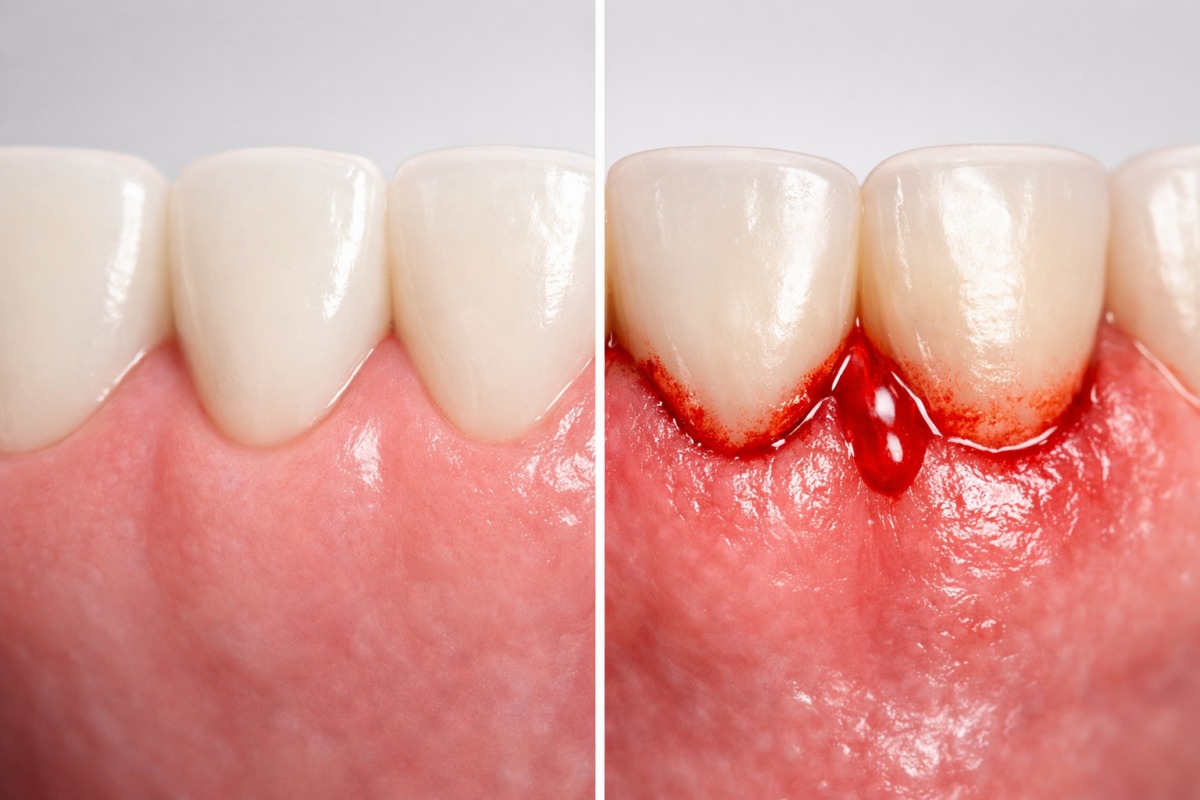
Seeing blood when brushing or flossing can be concerning, but bleeding gums are not something that should simply be ignored. In many cases, bleeding is a sign that the gums are inflamed or irritated and may indicate an underlying oral health problem.
Healthy gums should generally not bleed during normal brushing or flossing. Understanding why your gums bleed can help you identify the problem early and protect your teeth and gums in the long term.
What Causes Gums to Bleed?
There are several possible reasons for bleeding gums. The most common cause is the buildup of plaque along the gumline.
Plaque and Gum Inflammation
Plaque is a sticky layer of bacteria that naturally forms on the teeth. If it is not removed properly, it can irritate the gums and cause inflammation.
This early stage of gum disease is called gingivitis. Common signs include red, swollen, tender, or bleeding gums.
Brushing Too Hard
Using excessive pressure while brushing can irritate the gums and cause bleeding. A toothbrush with soft bristles and gentle brushing technique is usually recommended.
Bleeding should not be considered a sign that you are brushing effectively. Proper technique is more important than applying force.
Not Flossing Regularly
If you have recently started flossing after not doing it regularly, your gums may bleed because they are inflamed.
With consistent and gentle flossing, bleeding caused by mild gum inflammation may improve. However, persistent bleeding should be evaluated by a dental professional.
Tartar Build-Up
Plaque that remains on the teeth can harden into tartar, also known as dental calculus.
Tartar cannot be removed effectively with regular brushing alone and may require professional dental cleaning. Leaving tartar around the gumline can contribute to ongoing gum inflammation and bleeding.
Gum Disease
Persistent bleeding can be a sign of periodontal disease.
As gum disease progresses, the tissues supporting the teeth can become affected. Other possible signs include gum recession, persistent bad breath, gum tenderness, or loose teeth.
Early diagnosis and treatment can help prevent more serious problems.
Can Bleeding Gums Be a Sign of Something More Serious?
Sometimes, yes.
Occasional bleeding may result from minor irritation, but frequent or unexplained bleeding should not be ignored.
If bleeding is accompanied by swelling, persistent bad breath, gum recession, pus, loose teeth, or pain, it is important to schedule a dental examination.
A dentist can determine whether the bleeding is caused by simple gum inflammation or whether there is a more advanced periodontal problem.
What Should You Do If Your Gums Bleed?
The first step is to maintain good oral hygiene rather than stopping brushing or flossing.
Brush Gently
Use a soft-bristled toothbrush and gentle movements along the gumline.
Clean Between Your Teeth
Floss or use an appropriate interdental cleaning method to remove plaque from areas your toothbrush cannot reach.
Schedule a Professional Cleaning
If tartar has accumulated, professional dental cleaning may be necessary to restore gum health.
Visit Your Dentist
If bleeding continues despite good oral hygiene, a dental examination can identify the underlying cause and determine whether additional treatment is needed.
How Can You Prevent Bleeding Gums?
Good daily habits can significantly contribute to healthier gums.
Brush twice a day: Clean your teeth and gumline gently and thoroughly.
Clean between your teeth: Regular interdental cleaning helps remove plaque from difficult-to-reach areas.
Have regular dental check-ups: Professional examinations can detect gum problems before they become more advanced.
Maintain professional cleaning when recommended: Removing tartar can help control gum inflammation.
Avoid smoking: Smoking can negatively affect gum health and may increase the risk of periodontal disease.
When Should You See a Dentist?
You should consider a dental examination if your gums:
- Bleed frequently when brushing or flossing
- Remain swollen or red
- Feel painful or tender
- Recede from the teeth
- Have pus or unusual discharge
- Are associated with loose teeth
- Cause persistent bad breath
Early attention can make many gum problems easier to manage and can help protect the supporting structures around your teeth.
Why Healthy Gums Matter
Healthy gums are an essential part of a healthy smile. They support and protect the teeth while providing an important barrier against bacteria.
Taking care of your gums is not only about preventing bleeding—it is about protecting your teeth and maintaining your oral health for years to come.
At Dr. Joe Karam’s clinic, gum health is an important part of comprehensive dental care. A professional evaluation can identify the cause of bleeding and help determine the most appropriate treatment for your individual needs.
Frequently Asked Questions
- Is it normal for gums to bleed when brushing?
Regular bleeding is not considered normal. It can be a sign of gum inflammation, plaque buildup, brushing too aggressively, or periodontal disease. If the bleeding persists, it is best to have your gums examined by a dentist.
- Should I stop brushing if my gums bleed?
No. Stopping brushing can allow more plaque to accumulate and may make the problem worse. Instead, use a soft-bristled toothbrush and gentle technique. If bleeding continues, consult your dentist.
- Can gingivitis cause bleeding gums?
Yes. Bleeding is one of the common signs of gingivitis, which is an early form of gum disease caused primarily by plaque buildup. With appropriate oral hygiene and professional care when needed, gingivitis can often be managed effectively.
- When should bleeding gums become a concern?
If your gums bleed frequently, heavily, or without an obvious reason—or if bleeding is accompanied by swelling, pain, gum recession, bad breath, pus, or loose teeth—you should schedule a dental examination.
Final Thoughts
Bleeding gums may seem like a minor issue, but they can be an early warning sign of gum inflammation or periodontal disease. Healthy gums should not regularly bleed during normal brushing or flossing.
Maintaining good oral hygiene and having regular dental check-ups can help identify the cause early and protect your gums and teeth.
If your gums are frequently bleeding, don’t ignore the warning sign. A professional dental examination is the best way to understand the cause and find the right solution.