


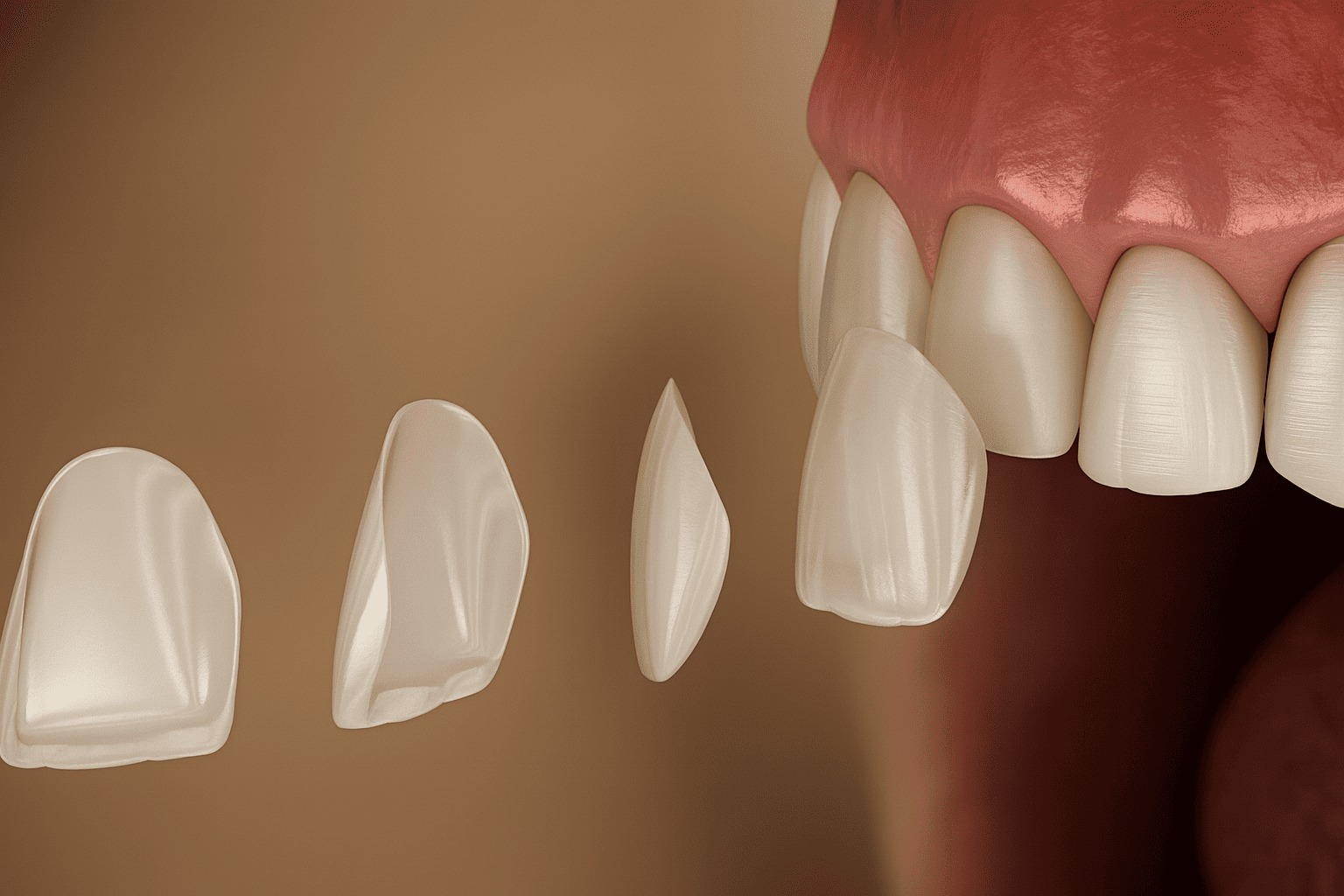
When considering veneers, one of the most common questions patients ask is: Emax or composite veneers—which is better?
Both options can improve the appearance of your smile, but they differ significantly in material, aesthetics, durability, treatment process, and long-term performance. Understanding these differences can help you make a more informed decision about your smile.
What Are Emax Veneers?
Emax veneers are thin, custom-made ceramic restorations produced from high-quality lithium disilicate ceramic. They are designed individually for each patient to improve the shape, color, proportion, and overall appearance of the teeth.
One of the major advantages of Emax ceramic is its ability to reproduce the translucency and light-reflecting properties of natural teeth. When carefully designed and bonded, Emax veneers can create a highly aesthetic and natural-looking smile.
What Are Composite Veneers?
Composite veneers are made from tooth-colored composite resin that is applied directly to the teeth and shaped by the dentist.
Because the material can be placed directly on the teeth, composite veneers can often be completed more quickly than laboratory-made ceramic veneers. They can also be easier to repair or modify if the material becomes damaged.
Composite veneers can provide an attractive improvement to the smile, particularly when the treatment is planned carefully and the patient’s expectations are appropriate for the material.
Emax vs. Composite Veneers: Key Differences
Aesthetics
Emax veneers generally offer excellent optical properties, including translucency and depth that can closely resemble natural enamel.
Composite can also produce beautiful results, but its optical characteristics and surface appearance may differ from high-quality ceramic.
Durability
Emax ceramic is known for its strength and durability and is designed to provide long-term performance when properly planned, placed, and maintained.
Composite is generally more susceptible to staining, chipping, and surface wear over time, particularly in patients with heavy biting forces or habits such as teeth grinding.
Stain Resistance
Ceramic veneers have a highly polished surface that is resistant to many of the stains that can affect natural teeth and composite materials.
Composite resin can gradually pick up discoloration from foods and drinks, which may affect its appearance over time.
Treatment Time
Composite veneers can often be completed in fewer appointments because the material is applied and shaped directly on the teeth.
Emax veneers are typically designed digitally or through detailed impressions, fabricated, and then carefully fitted and bonded, making the process more involved.
Repairability
One advantage of composite veneers is that they can often be repaired relatively easily if a small portion chips or becomes damaged.
Ceramic veneers are more difficult to repair once fractured, although individual veneers can generally be replaced when necessary.
Which One Is Better?
There is no universal answer.
The right choice depends on factors such as your dental condition, desired appearance, budget, bite, number of teeth being treated, and long-term expectations.
For patients seeking highly aesthetic, durable, and natural-looking results, Emax veneers can be an excellent option. Composite veneers may be appropriate for patients looking for a more conservative or potentially more accessible cosmetic solution.
A professional assessment is essential before deciding which material is best for your smile.
The Importance of Smile Design
Choosing between Emax and composite should not be based on material alone.
The final appearance of a smile also depends on tooth proportions, shape, color, translucency, gum levels, facial features, and how the teeth work together when you bite.
At Dr. Joe Karam’s clinic, each smile is individually evaluated and planned according to the patient’s facial characteristics, dental needs, and aesthetic goals.
The objective is not simply to create whiter teeth—it is to create a balanced, harmonious smile that suits the individual patient.
Frequently Asked Questions
- Are Emax veneers better than composite veneers?
Emax veneers generally offer superior durability, stain resistance, and ceramic aesthetics. However, composite veneers can be a suitable option in certain cases. The best choice depends on your individual needs and treatment goals.
- Which veneers look more natural: Emax or composite?
Both can look natural when properly designed and placed. Emax ceramic can provide excellent translucency and light reflection, allowing it to closely reproduce the appearance of natural enamel.
- Which lasts longer, Emax or composite veneers?
Emax veneers are generally more durable and resistant to staining and wear than composite veneers. However, the lifespan of either option depends on factors such as oral hygiene, bite, dental habits, material quality, and regular dental care.
- Can composite veneers be replaced with Emax veneers?
Yes. In suitable cases, existing composite restorations can be removed and replaced with ceramic veneers such as Emax. The exact approach depends on the condition of the teeth and the existing restorations.
Final Thoughts
Emax and composite veneers can both transform a smile, but they offer different advantages. Understanding the differences in aesthetics, durability, maintenance, and treatment process is the first step toward making the right decision.
A consultation with an experienced cosmetic dentist can help determine which option is most appropriate for your teeth, your smile, and the result you want to achieve.